Plinko Strategies & Tips

While Plinko is fundamentally a game of chance powered by RNG, smart players can use bankroll management and risk optimization to extend their playtime and maximize potential returns. Here are the most effective strategies used by experienced Plinko players in 2026.
1. Center Drop Strategy
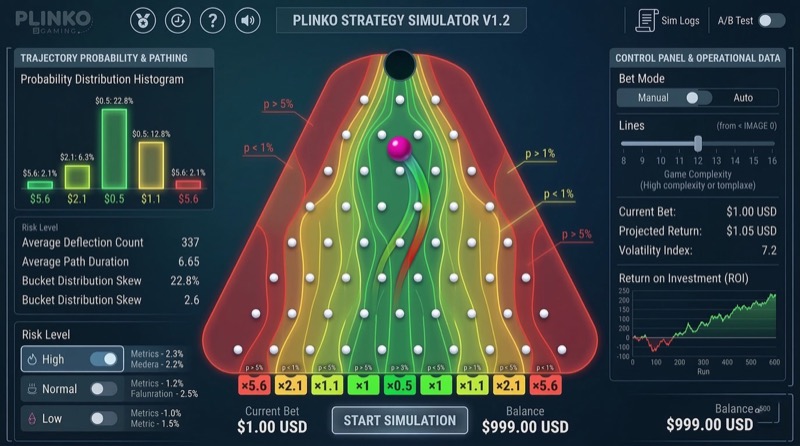
Dropping the ball from the center position gives it the most balanced path through the pins. Statistically, center drops tend to land near the middle multiplier slots more often. This is ideal for Low Risk mode where center slots still offer 1.0x-1.1x returns, keeping your balance stable while waiting for the occasional higher multiplier hit.
2. Staircase Betting Strategy
Start with your minimum bet and increase by a fixed amount after each loss. After a win, return to the minimum. For example: $1, $2, $3, $4... then back to $1 after a win. This limits losses during cold streaks while capturing profits on wins.
Best for: Medium Risk mode with 10-12 pins.
3. Row Count Optimization
The number of pins dramatically affects your variance:
- 8 pins — Low variance, predictable results. Best for beginners.
- 10-12 pins — Balanced variance. Sweet spot for most strategies.
- 14-16 pins — High variance. Big potential wins but frequent losses.
For long sessions, 10-12 pins on Medium Risk offers the best balance between excitement and bankroll preservation.
4. Offset Drop Strategy
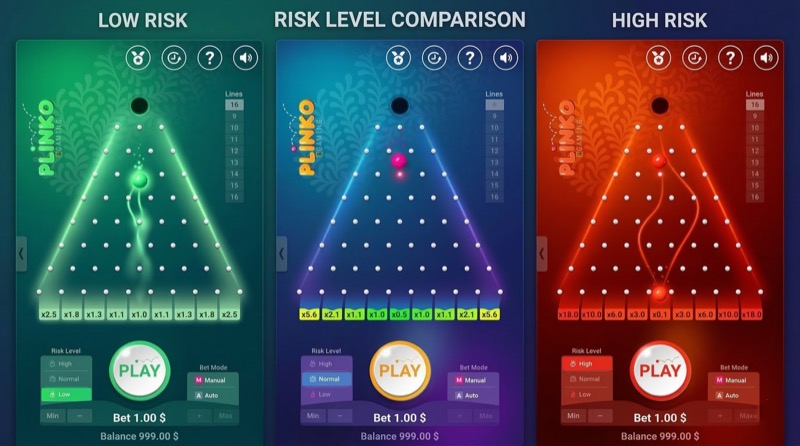
Instead of dropping from dead center, drop 3-4 positions to the left or right. This biases the ball's path toward one side of the board, which on High Risk mode can increase your chances of hitting the extreme multiplier slots (100x-1000x). However, it also increases the chance of hitting low 0.2x slots.
Best for: High Risk mode, large bankroll, seeking jackpot hits.

5. Bankroll Management
The most important strategy in any casino game:
- Never bet more than 2-5% of your total bankroll on a single drop.
- Set a session budget and stop when you reach it — win or lose.
- Set a win target (e.g., double your buy-in) and cash out when reached.
- Never chase losses. If you've hit your loss limit, walk away.
6. Low Bet + High Volume
Make many small bets rather than few large ones. This smooths out variance and gives you more data to evaluate your strategy. Use Auto Play with 50-100 drops to test different risk/pin combinations efficiently.
7. Don't Chase Losses
The most common mistake is doubling your bet after a loss trying to recover. Each drop is independent — previous results have zero effect on future outcomes. Stick to your planned bet size regardless of recent results.
Plinko RTP & House Edge by Provider
Return to Player (RTP) is the theoretical percentage of wagered money returned to players over time. Plinko RTP varies by game provider and is independently audited. Always check the RTP in your casino's game info panel before playing.
| Provider | Game | RTP | House Edge | Max Multiplier |
|---|---|---|---|---|
| Spribe | Plinko | 99% | 1% | 1000x |
| BGaming | Plinko XY | 99% | 1% | Varies |
| SmartSoft | Plinko | 97.09% | 2.91% | Varies |
| Turbo Games | Plinko | 96% | 4% | Varies |
RTP is calculated over millions of rounds. Short sessions can deviate significantly from these averages. A 99% RTP means for every $100 wagered, $99 is returned on average — but individual sessions are highly volatile.
Multiplier Ranges by Risk Level & Pin Count
| Risk Level | Pins | Min Multiplier | Max Multiplier | Variance | Best For |
|---|---|---|---|---|---|
| Low | 8 | 0.5x | 5.6x | Low | Beginners, long sessions |
| Low | 12 | 0.5x | 11x | Low-Medium | Steady bankroll growth |
| Low | 16 | 0.4x | 16x | Medium | Patient players |
| Medium | 8 | 0.4x | 13x | Medium | Balanced play |
| Medium | 12 | 0.3x | 25x | Medium-High | Experienced players |
| Medium | 16 | 0.2x | 110x | High | Risk-tolerant players |
| High | 8 | 0.2x | 29x | High | Thrill seekers |
| High | 12 | 0.2x | 141x | Very High | Big win hunters |
| High | 16 | 0.2x | 1000x | Extreme | Jackpot chasers |
Data based on Spribe Plinko (source: spribe.co). Multiplier values may vary between providers. Higher risk = wider range between minimum and maximum multipliers.
Ernest Levin's take: after logging thousands of drops across every risk/pin combination, the pattern that holds is unglamorous — the players who last are the ones who fix a stake size before the first drop and never move it. High Risk on 16 pins is the most fun to watch and the fastest way to end a session.
Sources & Verification
Game data sourced from official provider documentation: Spribe Plinko, BGaming, Turbo Games. RTP figures are independently audited and published in each game's paytable. Casino licensing verified via Gaming Curacao and Malta Gaming Authority.
Remember: Plinko is designed for entertainment. No strategy can overcome the house edge in the long run. Set limits, play responsibly, and enjoy the game. 18+
Ready to practice? Try our free Plinko demo with $1,000 virtual balance — no registration required.
Ready to practice? Try our <a href="/plinko-demo/">free Plinko demo</a> with $1,000 virtual balance — no registration required.